
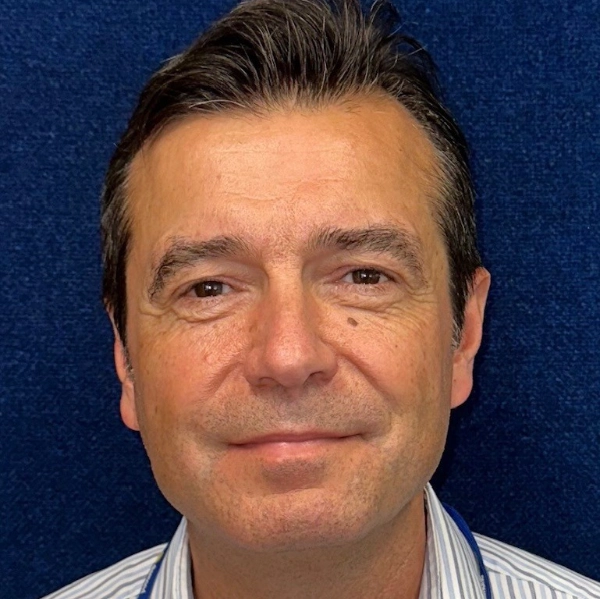
Johnson Matthey, UK
Dogan Ozkaya works as a Scientific Consultant in Advanced Characterisation Department at Johnson Matthey, Sonning Common, UK, having lead the Microscopy team many years. He holds a PhD in Materials Science and Metallurgy from the University of Cambridge, UK. He carried out postdoctoral research in electron microscopy of various materials in several university departments, including the Cavendish Laboratory, University of Cambridge, and the Materials Department, University of Oxford, before joining Johnson Matthey in 2003. His interests lies in catalysts characterisation through the length scales, atomic scale characterisation of compositions, speciation and structure of nanoparticles using advanced EELS techniques plus zeolite characterisation at all scales.
Microscopy has played a fundamental role in particle characterisation for decades. Traditionally, however, it has been viewed as a localised analytical technique that suffers from not being statistically representative and is often considered both time-intensive and expensive to deploy.
Recent advances in artificial intelligence have significantly transformed the value proposition of microscopy. In particular, the ability to accurately process and analyse vast quantities of imaging data through AI-assisted thresholding, segmentation, and feature recognition has addressed many of the historical limitations associated with the technique. As a result, microscopy has become an indispensable tool for particle science, providing quantitative information across several orders of magnitude while maintaining a high level of accuracy and detail.
Furthermore, microscopy offers uniquely rich datasets that combine morphological, structural, and compositional information. This comprehensive characterisation capability makes it an essential component of modern research and development, enabling a deeper understanding of materials and processes.
In this presentation, I will review recent developments in multiscale microscopy techniques spanning the full-length-scale of materials characterisation, from X-ray microscopy (XRM) and 3D slice-and-view reconstructions via focussed ion beam to atomic-resolution transmission electron microscopy (TEM). These advances are mostly AI assisted and this is transforming catalysis from what has often been considered a largely empirical discipline into a science driven by fundamental understanding. By integrating realistic microscopy data with advanced modelling approaches, we can now establish direct relationships between structure, composition, and catalytic performance, providing unprecedented insight into the factors governing catalytic activity and selectivity. Examples from fuel cell catalysis and exhaust treatment systems will be presented.